Why it happens at all
Nobody decides to mismatch a pallet. It happens because pallets and containers are bought by different people, on different cycles, from different suppliers, against different specifications. Packaging comes from procurement. Pallets come from whoever delivers them with product, or from a yard across town, or from the pile out back.
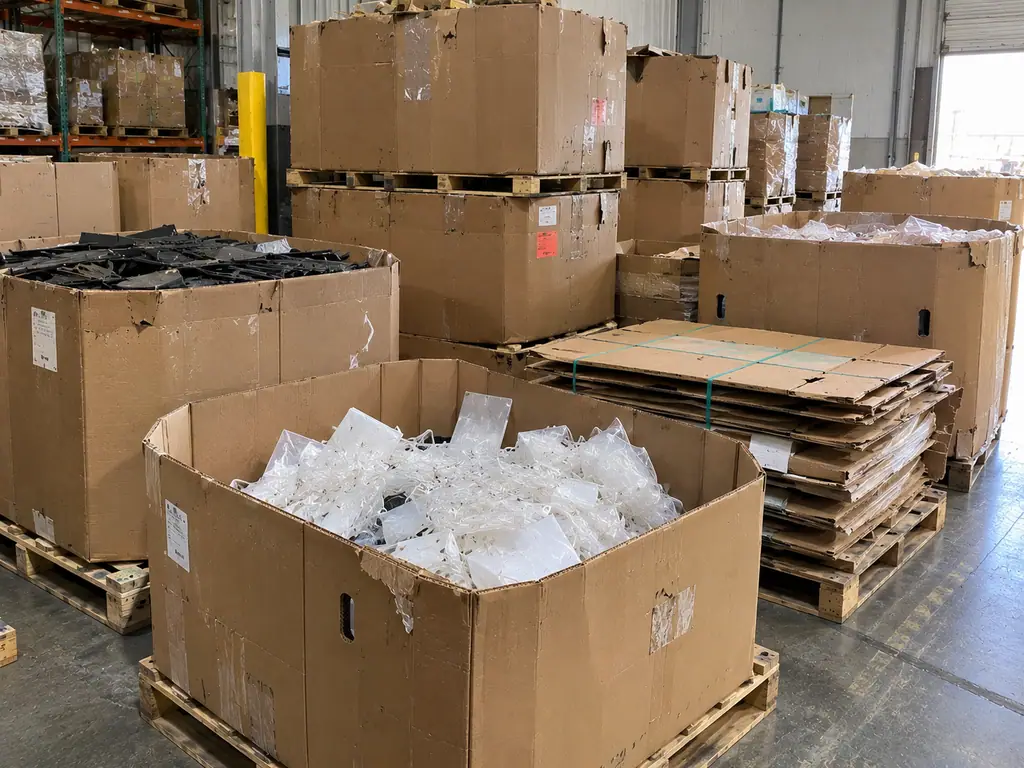
Plants are often certain the two match, and measurement sometimes proves otherwise — usually a 48×40 container on a mixed pile that includes 48×48 and 42×42 pallets because nobody sorted the inbound.
The direct cost: damage
Overhang removes support from the vertical corner, which carries the majority of stacking load. The container does not fail immediately; it deforms slowly, then fails under the next unit stacked on it. By the time the damage is visible, the product inside has usually shifted too.
A typical pattern: repeated damage claims traced back to one batch of odd-sized pallets that entered the pool with inbound deliveries and were never separated. The claims can easily cost far more than the pallets ever did.
The indirect cost: a rack level
A 48×48 pallet under a 48×40 container also makes the footprint eight inches deeper than the rack bay was designed for. Plants respond by storing those units on the floor instead, which usually means losing a rack level somewhere else to compensate.
A lost rack position has a real opportunity cost every year. Multiply it by the number of mismatched units sitting on your floor right now.
The conversation nobody enjoys
Cargo claims hinge on whether the shipper packaged the load appropriately. A photograph showing inches of corrugated hanging off a pallet deck is, in the carrier's view, a strong defence.
It is worth knowing that your own insurer will take the same view. Appropriate packaging includes appropriate support, and overhang is the easiest possible evidence that support was not appropriate.
The fix, in three steps
None of this requires a project. It requires one afternoon and a decision to keep the two specifications joined.
- Measure what you actually have. Pull twenty pallets at random from the pool and measure them. Not the spec sheet — the pallets.
- Sort the pool. Anything that is not your standard footprint goes out on the next recycling or return collection.
- Join the specifications. Put the pallet on the same quote as the container, from the same supplier, with the footprint stated on both lines.
What good looks like
A plant with this solved has one footprint in the building, pallets graded #1 under anything that gets stacked, and a purchase order where the box and the pallet are adjacent lines. Incoming pallets that do not match are segregated at receiving rather than absorbed into the pool.
It is unglamorous. It is also the single highest-yield packaging change available to most facilities, and it costs essentially nothing.