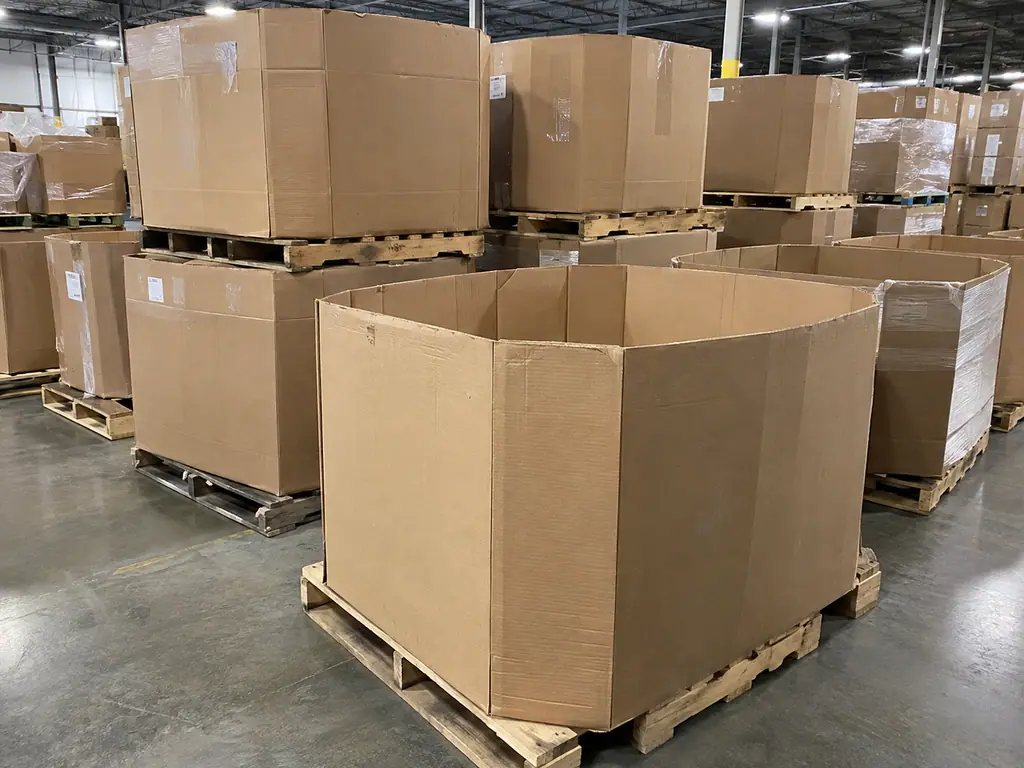
The four grades
Grading is a physical inspection, performed per unit, in a fixed sequence.
- Grade A — structurally and cosmetically near-new. Square corners, clean interior, no printing conflicts, full-strength flaps. Suitable for customer-facing and food-adjacent use.
- Grade B — sound structure with light cosmetic wear: scuffing, old labels, minor edge fray. The most commonly sold grade and the best value in bulk handling.
- Grade C — working condition. Repaired or trimmed corners, visible wear, reduced height possible. Ideal for internal staging and scrap collection.
- Grade D — fiber only. Structurally finished as a container; destined for cutting, upcycling or the OCC stream.
The inspection sequence
Order matters, because the cheapest rejection should happen first. Good graders screen moisture and odor before anything else, since both are disqualifying and detectable in seconds. Then vertical corner integrity, which carries the stack load. Then flap condition, then squareness, then interior cleanliness, then cosmetics.
Caliper measurement of wall thickness confirms the flute combination last, because a box that fails any earlier step never needs measuring.
Automatic rejections
Four conditions remove a unit from resale regardless of everything else.
- Water staining above the bottom score line, or any delamination.
- Grease or oil strike-through on the body.
- Evidence of pest activity, including frass or gnaw marks.
- Any odor that persists after thirty seconds in open air.
What to ask any supplier
Ask whether grading is per unit or per lot. Per-lot grading means someone looked at the top layer of a pallet and priced the rest on faith. Ask for photographs of your actual load before it ships, and ask what the rejection rate was. A supplier who cannot answer the rejection-rate question is not grading.