The flow nobody designed
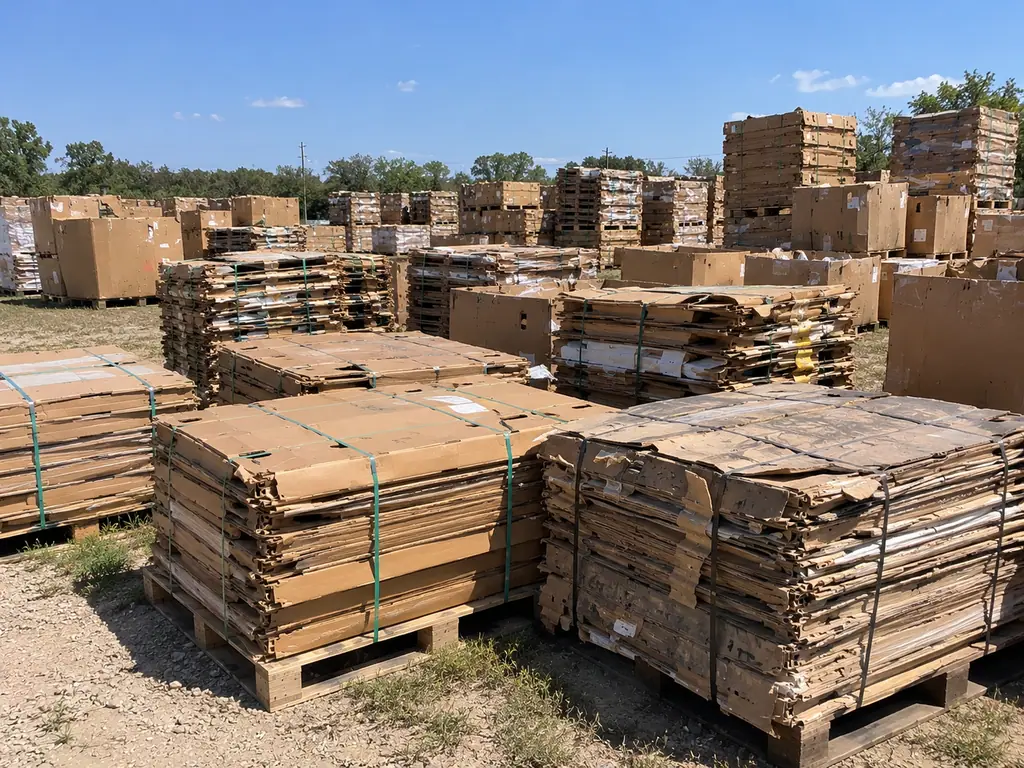
Docks are laid out around product arriving and product leaving. The packaging those products arrive in flows in the opposite direction, usually through whatever space is left over, and the result is the pile in the corner that everyone complains about.
The fix is not more space. It is a named lane with a direction, which is mostly a decision rather than a construction project.
The four stations
A functioning reverse flow has four stations, and they need to be adjacent and in order.
- Empty-out: where product leaves the container. Usually already exists.
- Assess: a two-metre bench with the repair trigger posted above it. Sound units go one way, failures the other.
- Collapse and stack: flat stacks, scores aligned, dated.
- Stage: where collection happens, ideally within sight of a dock door.
Why the assess station matters most
Without it, every container gets treated identically — which in practice means the worst unit in the batch sets the standard for all of them, and sound containers get flattened carelessly alongside dead ones.
The station itself is a bench, a posted list of four or five rejection criteria, and a marker for date-stamping. A bench like that can raise the resale value of a plant's empties, because the sound units stay sound.
The space arithmetic
A plant generating two hundred empties a month needs roughly two hundred square feet for the whole reverse flow, including staging for a monthly collection. That is a small fraction of what most sites are already losing to the uncontrolled pile.
If floor space is genuinely unavailable, increase collection frequency instead. Weekly collection needs about a quarter of the staging area of monthly collection.
Signage and the feedback loop
Two laminated cards do most of the work: one at the empty-out station showing how to collapse along the score lines, one at the assess station listing the rejection criteria.
Then close the loop by telling the team what the empties were worth and what happened to the money. Behaviour that produces no visible consequence decays; behaviour attached to a number on a board does not.
What it returns
A designed reverse flow typically means better resale value for empties, fewer damage-related replacement purchases, and no more periodic clear-out that used to consume a Saturday.
None of that required equipment. It required deciding that the packaging flowing out of the building was worth the same attention as the product flowing in.