What Grade A means on this construction
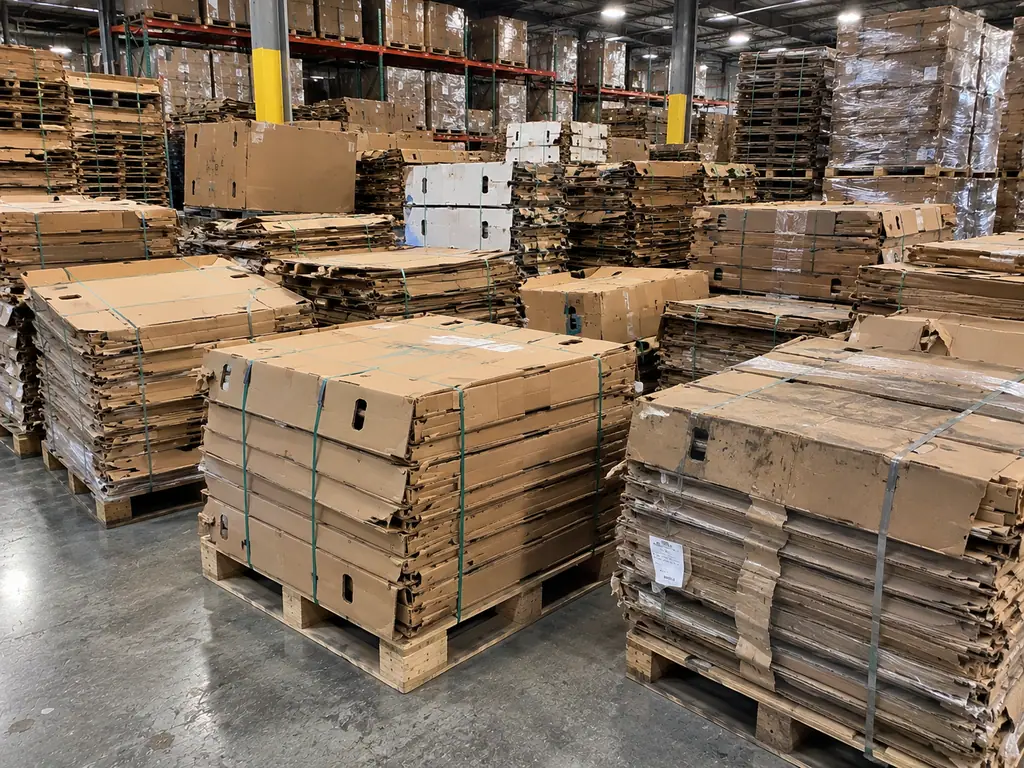
A Grade A triple-wall gaylord on a 48×40 footprint is structurally and cosmetically near-new: four square vertical corners with no repair, full-strength bottom flaps, a clean interior with no residue or dust film, no conflicting print on the primary faces, and a caliper-verified BCC wall at roughly 7/16 of an inch.
In practice these come from facilities that received product once, unloaded indoors, and never stacked the empty outdoors, which is why Grade A stock is often scarce.
The inspection, in order
Grade A units go through the standard sequence plus three additional checks.
- Moisture and odor screen — thirty seconds in open air, no exceptions.
- Vertical corner integrity under thumb pressure at three heights.
- Bottom flap fold test — a flap that has lost its score is a Grade B at best.
- Squareness measured diagonally; more than 3/8 inch of rack drops the grade.
- Interior wipe for residue and dust film, because food-adjacent buyers will check.
- Caliper reading at two points to confirm BCC rather than BC.
When to pay the premium
Grade A usually costs more than Grade B. It earns that in three situations: when the container is customer-facing, when it is going into a food-adjacent intake process with a visual standard, and when you need the maximum number of future trips out of a reusable pool.
For internal staging, scrap collection, textile sorting or anything that will take a forklift scar in its first week, Grade B is usually the better purchase.
Pairing
Pair with a #1 recycled GMA 48×40 pallet, a telescoping lid in the matching footprint, and V-board corner protection if the unit will be strapped. A Grade A body on a Grade B pallet is a false economy — the pallet is where the load fails.