Reuse first. Recycling second.
Recycling corrugated board is one of the great success stories in materials, and it still comes after reuse for a container that can do another job. Reusing a gaylord avoids building a new one.
- 01Quote request
- Free, no obligation
- 02Fulfilled by
- Partner suppliers
- 03Requests from
- Across the US
- 04Pricing
- By written quote
Four steps, in order
A container should only move down this list when it cannot do the job above. Scroll the rail.
1 · Reuse
A second trip for an existing container avoids making a new one for that trip. This is where most of the benefit lies.
2 · Repair
Some suppliers trim worn top edges or repair corners so a container can make further trips.
3 · Recycle
Baled as OCC and pulped into new board. Corrugated is one of the most widely recycled packaging materials.
4 · Avoid landfill
Corrugated that is kept dry and clean almost always has a better route than landfill.
Where reuse loses
Reuse is not free of impact. Freight is real, and reverse logistics is real. A container trucked a very long way to be reused can lose to a new one made close to where it is needed, especially if the truck runs empty in one direction.
That is why it helps to source used containers from suppliers near your dock, and to ask for freight as its own line on the quote. If a local new box makes more sense for your lane, that is a reasonable answer too.
“If nobody can show you how the figure was measured, do not repeat it.”
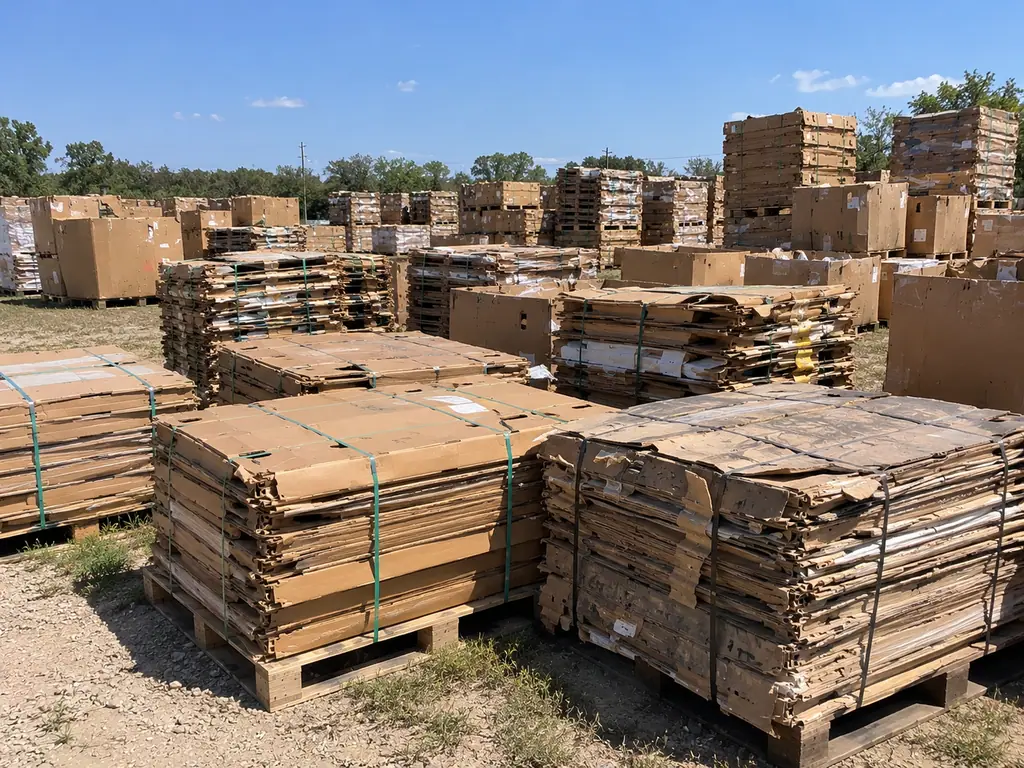 Storage
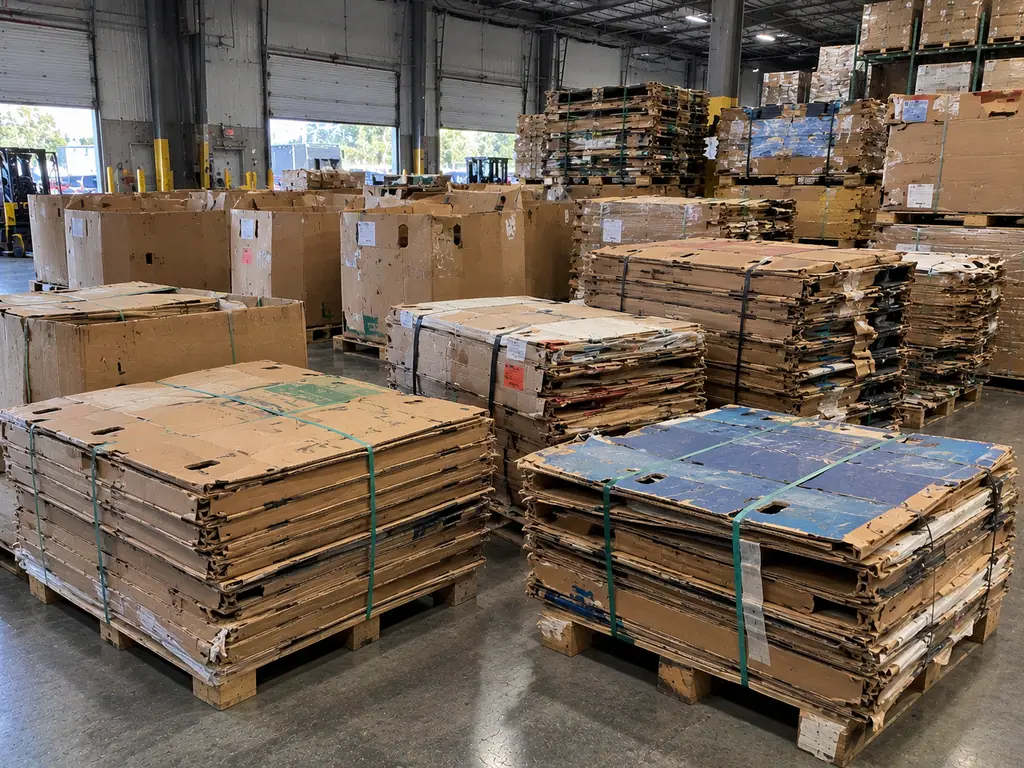 Used stock
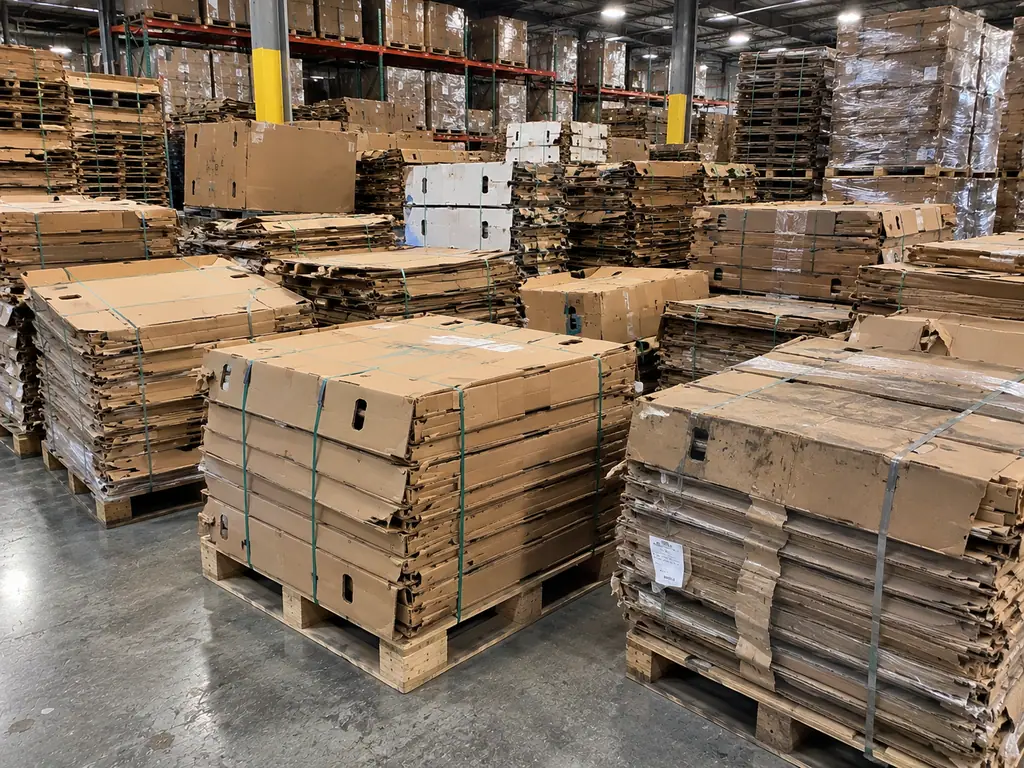 Bundles
Conversions and the seasonal picture
Useful when planning reuse, sale of empties and recycling across the year.
| Measure | Imperial | Metric | Notes |
|---|---|---|---|
| Standard footprint | 48 × 40 in | 1,219 × 1,016 mm | The GMA pallet that standardised US distribution. |
| Triple wall thickness | 7/16 in | 11.1 mm | Takes about 7/8 in off interior width across both walls. |
| Typical capacity | 2,200 lb | 998 kg | Triple wall BCC, evenly distributed, matched pallet. |
| Container cube at 36" | 33.3 ft³ | 0.943 m³ | Outside dimensions, before board thickness. |
| OCC bale | 1,000 – 1,400 lb | 454 – 635 kg | Typical bale from a horizontal baler. |
| Trailer capacity, knocked down | 400 – 600 units | — | 53-foot dry van; cube limited, never weight limited. |
| Moisture ceiling for OCC | 12% | 12% | Above this you are selling water at a penalty. |
| Period | Supply | Demand | What to do |
|---|---|---|---|
| January – March | High — post-peak returns flood the market | Low | Best buying window of the year. Buy the annual pool if you have storage. |
| April – June | Tightening | Rising with early produce | Plan summer needs now, while supply is still reasonable. |
| July – September | Scarce, especially tall triple wall | Peak | Reserve inventory in June. Sell empties now — they are worth the most. |
| October – November | Moderate | High through retail peak | Confirm freight capacity early; carriers reprice light freight. |
| December | Flood in the last ten days | Falling | Opportunistic buying if you can take a load on short notice. |
Related reading
How to Store 600 Empty Gaylords Without Ruining Them
Empty containers are inventory, not waste — and they depreciate faster in a yard than almost anything else on your site.
Read →Reading the OCC Index Without Getting Fooled
Recovered corrugated has a published price, a seasonal rhythm and a contamination penalty. Most generators never see any of the three.
Read →What Is a Gaylord Box, Really?
The container named after a Michigan paper company that became the standard bulk box of American warehouses.
Read →How Used Gaylords Are Graded
A, B, C and D are not vibes. Here is what a careful grader looks at, in what order, and what gets rejected outright.
Read →Sustainability, interrogated
Is a used box better than a new box with recycled content?
Can I get documentation for my own sustainability report?
What about the plastic liners?
What should I avoid putting in recycling bales?
Have empties that could do another trip?
Send a description through the form. A partner supplier who buys or recycles used containers can follow up.