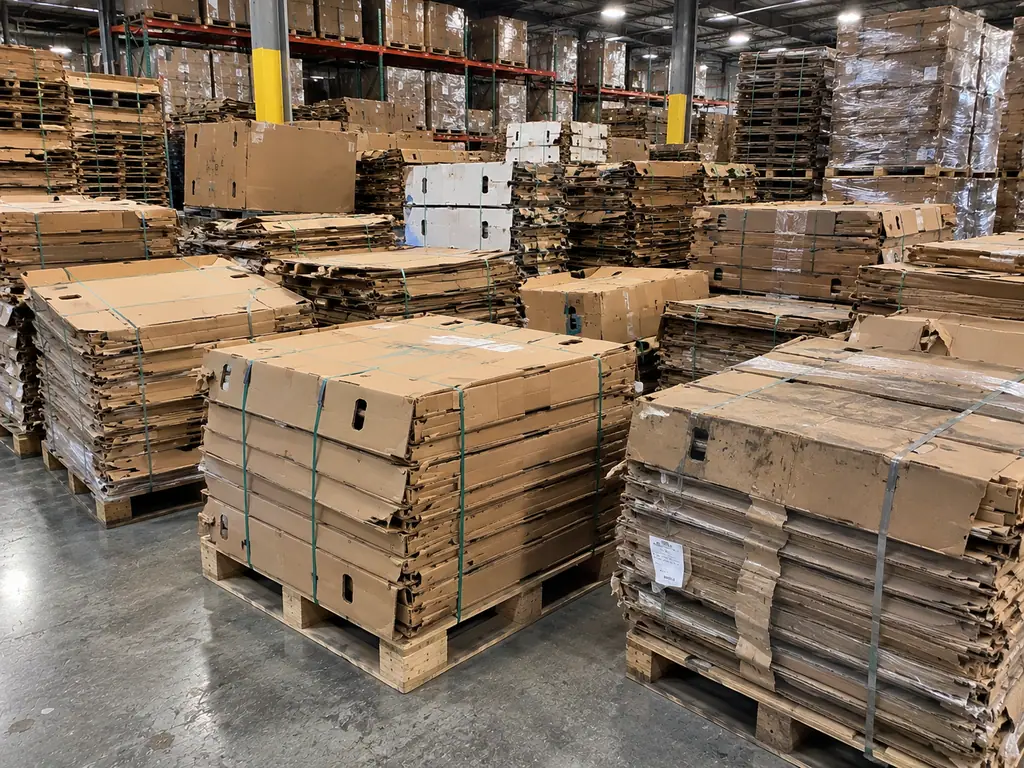
Why receiving is where quality is decided
A supplier's grading standard only matters if someone on your side checks it. Many disputes between buyers and sellers of used bulk packaging are not disagreements about grade — they are disagreements about when the damage happened, and nobody has evidence either way.
Thirty minutes of structured receiving removes most of that ambiguity. It can also improve what suppliers send you: a dock that inspects tends to get better loads.
Before the trailer doors open
Have the paperwork in hand: the bill of lading, the original quote with grade and construction stated, and the photographs the supplier sent before loading. If your supplier does not send photographs before loading, that is worth fixing before anything else on this list.
Check the seal if there is one. Note the trailer number. These details cost nothing and matter enormously if a load arrives wet.
The first look
Before anything comes off, photograph the load as it sits in the trailer. Two wide shots from the door, one of the top layer, one of the floor near the doors where water would pool. Those four images settle more disputes than almost any other single habit.
Look for water staining on the bottom of the stack and on the trailer floor. Corrugated has essentially no wet strength; a container that has sat in standing water is a recycling candidate regardless of how it looks when dry.
Counting without arguing
Count bundles, not boxes, and verify the bundle count against the bill of lading before the driver leaves. If the supplier bands in units of twenty-five and you count forty bundles, you have a thousand containers and a number both parties can check.
Open one bundle per pallet and count it. Banding counts are occasionally wrong, and finding that at receiving is a two-minute conversation. Finding it in week three is an accusation.
The sample inspection
You do not need to inspect every unit. Pull five percent at random — genuinely at random, from the middle of bundles as well as the top — and run the same sequence a grader would.
- Smell it. Thirty seconds in open air. Any persistent odor is a rejection, not a negotiation.
- Check moisture at the bottom score line, where it hides.
- Thumb-press each vertical corner at three heights, feeling for the hollow give of delamination.
- Fold a bottom flap. If the score has died, the unit is a grade lower than it was sold as.
- Caliper or finger-measure the wall. Triple wall is about 7/16 inch; double is about 9/32. Confirm you got what you bought.
Writing it down
Note the sample size, what you found, and the date on the receiving record. If the sample passes, you are done and the load is yours with a clean record. If it fails, you have a documented, specific, photographed objection within hours of delivery — which any reputable supplier will act on immediately.
A claims window of a few business days, with photographs and the signed bill of lading, is common across the industry. Check your supplier's terms. The clock usually starts at delivery, not at the point somebody notices.
One habit that changes everything
If you adopt nothing else from this article, adopt photographing the load before it is unbanded. It takes ninety seconds. It converts every future conversation from memory into evidence, and it protects you equally against a bad supplier and against your own second-shift forklift.