Whatever happens next to a box, one form
Buying, selling, recycling and moving bulk containers usually means finding four different companies. Here it means one request, passed to partner suppliers in our network.
- 01Quote request
- Free, no obligation
- 02Fulfilled by
- Partner suppliers
- 03Requests from
- Across the US
- 04Pricing
- By written quote
Pick the one that matches your dock
Each service is fulfilled by partner suppliers in our network, where available near you.
Buy Used Gaylords
Request graded used gaylords by the bundle or the truckload. A partner supplier in our network quotes your load.
Sell Your Gaylords
Turn a dock corner full of empties into an offer from a partner supplier who buys used containers.
Recycling & Baling
Recycling pickup for corrugated that is past reuse, arranged through partner suppliers.
Pickup & Delivery
Delivery of containers and pickup of empties, arranged through partner suppliers and their carriers.
Three common sources of avoidable packaging spend
“Buying new where used performs identically, buying one size for every load, and paying to dispose of material somebody would buy.”
Four steps, no discovery call
One written request starts it.
You describe it
Product, quantity, location, deadline. A little real detail beats a long meeting.
We match it
Your request goes to a partner supplier in our network who can serve your area.
The supplier quotes
Grade, construction, quantity and freight, with their terms.
You decide
Accept, ask questions or walk away. The request is free and carries no obligation.
The used-container year
Supply and demand swing with harvest, retail peak and the January reset. Plan around them.
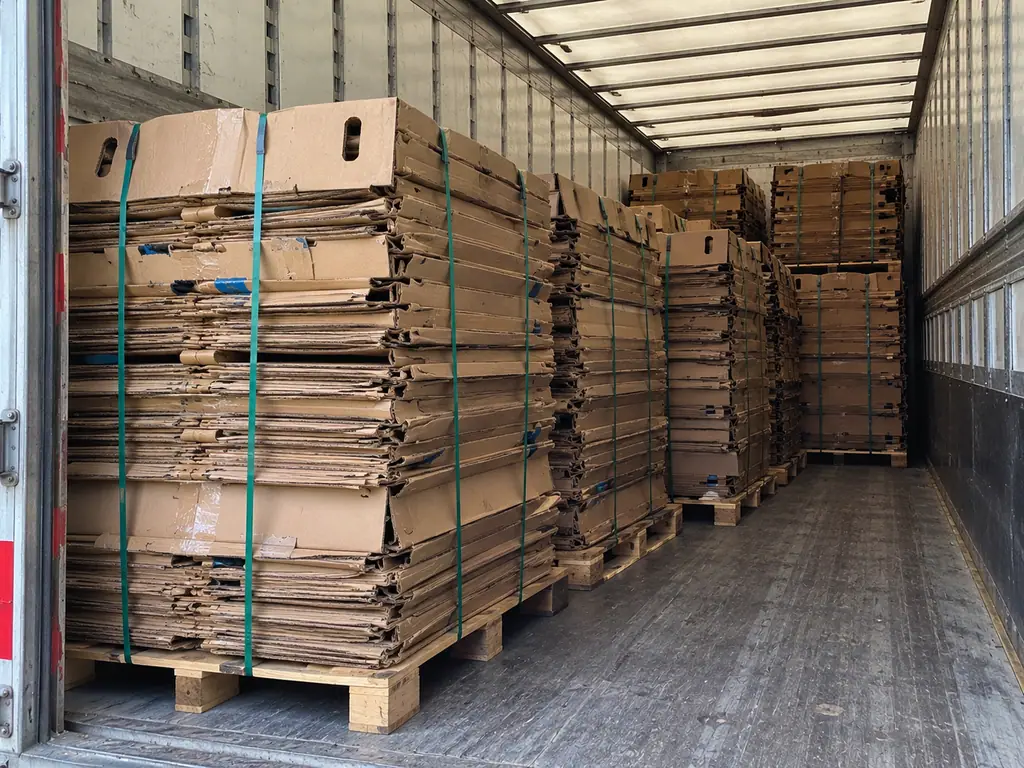 Freight
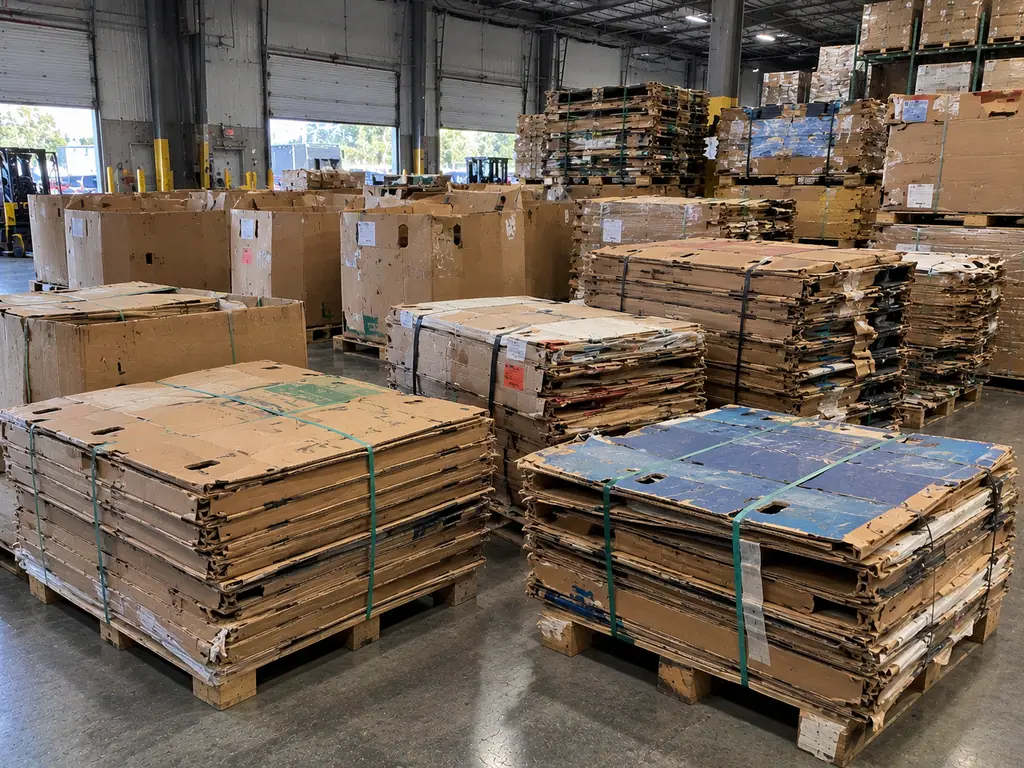 Used stock
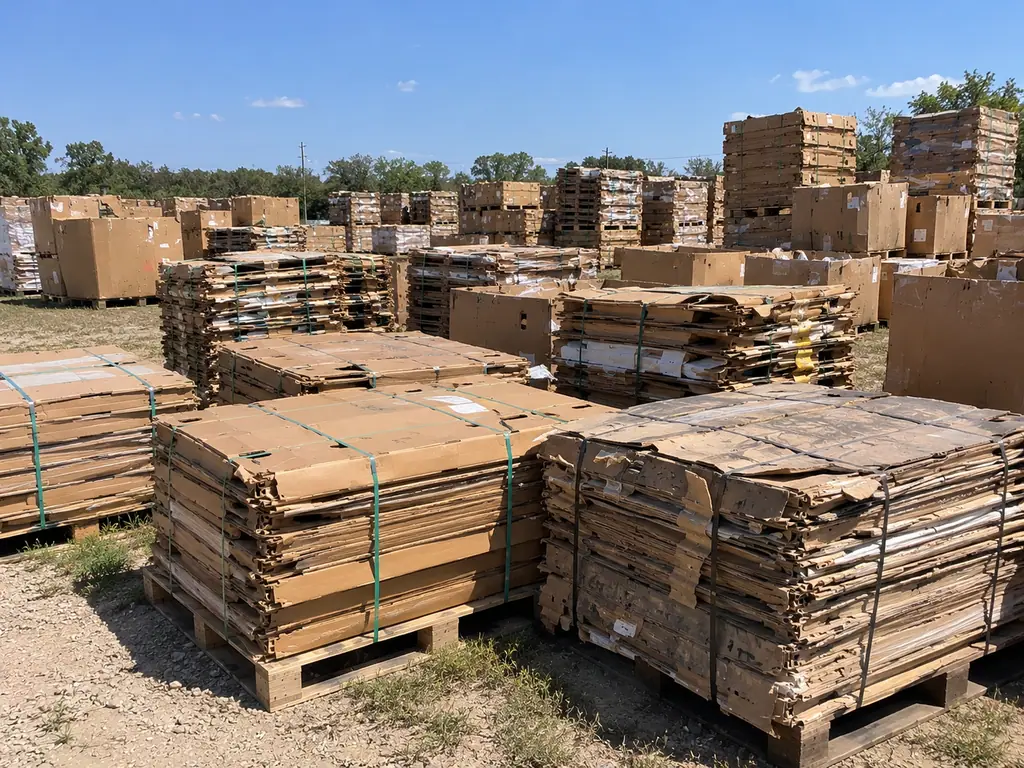 Storage
| Period | Supply | Demand | What to do |
|---|---|---|---|
| January – March | High — post-peak returns flood the market | Low | Best buying window of the year. Buy the annual pool if you have storage. |
| April – June | Tightening | Rising with early produce | Plan summer needs now, while supply is still reasonable. |
| July – September | Scarce, especially tall triple wall | Peak | Reserve inventory in June. Sell empties now — they are worth the most. |
| October – November | Moderate | High through retail peak | Confirm freight capacity early; carriers reprice light freight. |
| December | Flood in the last ten days | Falling | Opportunistic buying if you can take a load on short notice. |
The twelve-point inspection, in order
What a careful supplier checks on every used unit, and what you can check at receiving. The cheapest rejection happens first, which is why odor and moisture come before anything cosmetic.
Odor
Thirty seconds in open air, nose at the opening.
Any persistent smell — instant rejection.Moisture
Hand and meter at the bottom score line where it hides.
Staining above the bottom score, or any delamination.Vertical corners
Thumb pressure at knee, waist and shoulder height.
Hollow give, shear, or crush longer than four inches.Bottom flaps
Fold test on each flap; the score must hold.
Two or more dead scores sends the unit to cutting.Squareness
Diagonal measurement across the open top.
Over 3/8 inch of rack drops the grade.Interior cleanliness
Visual plus a wipe for residue and dust film.
Grease strike-through, product residue, staining.Pest evidence
Corners, flutes and under the bottom flaps.
Frass, gnaw marks or webbing — rejected outright.Wall thickness
Caliper at two points on a cut edge.
Mislabelled construction should be re-specified before it is quoted.Print & labels
Check for conflicting brands and old spec marks.
Covered, or graded down if legibility matters.Top edge
Fray, crush and compression over the perimeter.
Over a quarter of the perimeter → trim candidate.Previous repair
Tape, V-board inserts, replaced flaps from another life.
Should be declared on the quote, not presented as original.Origin lane
Where the unit came from and what was in it.
Industrial origins never enter the food-adjacent lane.Common questions on this subject
Short answers to common questions. If yours is not covered, ask it on the form and a partner supplier in our network can answer it with your quote.
All 33 answersHow much do used gaylords cost?
What areas do you serve?
Who am I dealing with?
Can I collect a load myself?
Can you match a competitor's price?
How does selling empties work?
What about confidential printing on our boxes?
How long will containers last in outdoor storage?
Related reading
How to Sell Your Empty Gaylords
A dock-level playbook: photographing, counting, grading honestly and getting paid for material you were about to pay to remove.
Read →How to Store 600 Empty Gaylords Without Ruining Them
Empty containers are inventory, not waste — and they depreciate faster in a yard than almost anything else on your site.
Read →What Is a Gaylord Box, Really?
The container named after a Michigan paper company that became the standard bulk box of American warehouses.
Read →How Used Gaylords Are Graded
A, B, C and D are not vibes. Here is what a careful grader looks at, in what order, and what gets rejected outright.
Read →Start with whichever end of the loop you are on
Buying, selling, recycling or moving: it all begins the same way. Tell us what you have and what you need it to do.