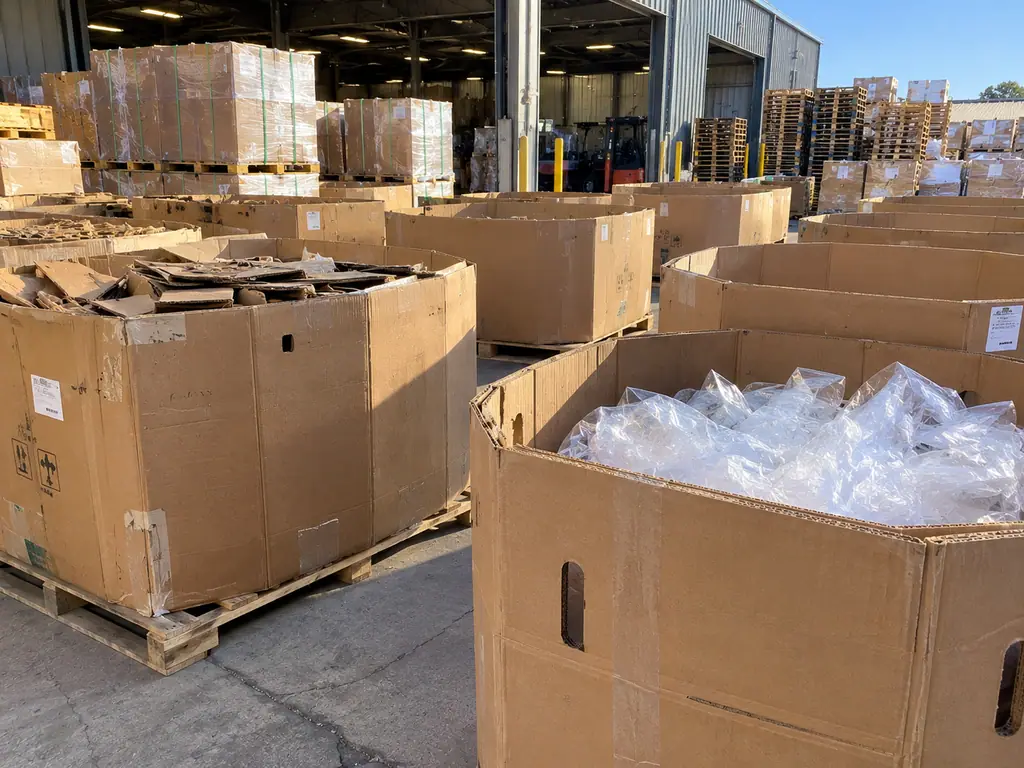
An inverted specification
Most bulk packaging advice assumes weight is the constraint. In textile sorting it almost never is. A 44-inch triple-wall container filled with mixed apparel might weigh five or six hundred pounds — comfortably inside what double wall would carry.
The constraint is cube, handling and the number of times the container gets loaded and emptied by hand.
Why tall wins
At a fixed footprint, going from 36 to 44 inches adds a lot of volume for a modest increase in cost. In a business where sorting stations are limited by floor space and throughput is measured in volume per station, that arithmetic is decisive.
The practical ceiling is reach. Above about 44 inches, hand-loading becomes awkward for many workers, and the top edge starts taking damage from people leaning in rather than reaching over.
Why triple wall anyway
If the load is light, why not double wall? Because the failure mode here is not compression — it is handling. Sorters are loaded, emptied, dragged, bumped and refilled dozens of times. Triple wall survives that cycle count; double wall does not.
This is one of the few applications where buying strength you will never load can still work out cheaper per trip.
Grade B, deliberately
Textile sorting is dusty, high-contact work. Grade A cosmetics do not survive the first week, so paying the Grade A premium is buying something you will lose almost immediately.
Grade B, with intact corners and sound flaps, is the correct purchase. The money saved funds the reconditioning cycle, which is where the real life extension comes from.
The quarterly reconditioning rhythm
Top-edge damage is the characteristic failure in textile work — the lip frays where people lean on it. It is also the cheapest thing to repair, because trimming to a true score removes exactly the worn section.
A quarterly cycle works well: collect the failed units, trim them, return them at 40 inches instead of 44, and let them finish their life in a less demanding station. The pool naturally sorts itself into tall primary sorters and shorter secondary ones.
What a well-run textile pool looks like
One footprint, two heights, every unit date-stamped, Grade B triple wall, corner boards on anything that gets strapped, and a quarterly truck that takes failures out and brings reconditioned units back.
Customers running this pattern typically see seven to eleven trips per container, which in a sector that historically treated containers as nearly disposable is a substantial change in cost per trip.