Buying · December 9, 2025 · 7 min read

The Anatomy of a Bad Quote: Nine Red Flags

Most problems with recovered packaging are visible in the quote, a week before anything arrives on a truck.

At a glance
Quote request
Free, no obligation
Fulfilled by
Partner suppliers
Requests from
Across the US
Pricing
By written quote
Request a quote

Put this to work on your load

Free and no obligation. The form notes which page you were reading, and a partner supplier in our network follows up.

US or Canada numbers only

US ZIP code or Canadian postal code

✳ required. Every field is checked before sending so genuine requests never sit behind spam. Your details are shared with partner suppliers in our network to prepare this quote. See the privacy policy.
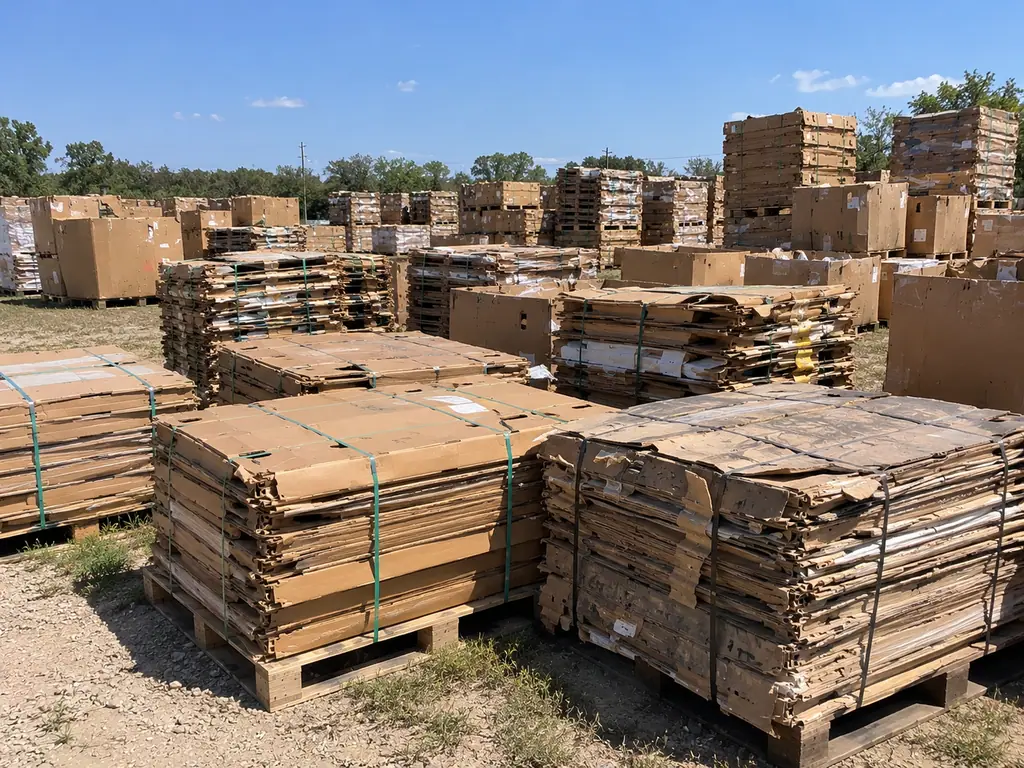
Outdoor storage area with banded pallets of flattened gaylord boxes under a blue skyStorage
Flattened containers on pallets outdoors. Corrugated has little wet strength, so cover it quickly.

The quote is the product

In recovered packaging, you are buying something you cannot see from a market with real variability. The quote is the only artefact you have before the truck arrives, and it tells you most of what you need to know about how the supplier operates.

Here are nine things that should make you ask another question. None of them is proof of bad faith; all of them are worth resolving in writing before you commit.

Flags one to three: what is missing

The first three are omissions, and they are the most common.

  • No grade stated. 'Used gaylords' is not a specification; A, B, C and D are different products at different prices.
  • No construction stated. Double wall and triple wall differ substantially in capacity.
  • Only one dimension set. Outside dimensions without inside dimensions means you cannot check whether your load fits.

Flags four to six: how it is priced

The next three concern the number itself.

  • Freight buried in the unit price. If you cannot see the freight cost, you cannot compare suppliers or decide whether a closer source is better.
  • A single landed number with no breakdown. Easier to produce, much harder to check.
  • A price that moves sharply when you mention volume. Grading labour does not have that much operating leverage; something else is flexing.

Flags seven to nine: how they talk about quality

The last three are about process rather than paperwork.

  • Per-lot grading rather than per-unit. Somebody looked at the top layer and priced the rest on faith.
  • No photographs of your actual load before shipping. Stock images are not evidence.
  • No answer to 'what is your reject rate?'. A supplier who does not know is not grading; a very low number means they are shipping units they should not.

The questions that resolve all nine

You do not need to interrogate anyone. Four questions in one email settle it: what grade and construction, inside and outside dimensions, what is the freight line separately, and will you photograph my actual load before it ships.

A supplier who answers all four plainly is one you can work with. A supplier who redirects to a phone call is managing the conversation rather than answering it.

Takeaway: If the quote does not state grade, construction, both dimensions and the freight line, you are buying a surprise.
Newer postFreight Planning for Seasonal SpikesOlder postClaims, Insurance and the Five-Day Window
Reference

The tables this post refers to

Construction reference for the figures discussed above.

Construction, thickness and typical working capacity
ConstructionThicknessTypical max weightStackingTypical use
Single wall C5/32" (4.0 mm)65 lbNot for bulkLids, layer pads, dividers
Double wall BC9/32" (7.1 mm)900 – 1,200 lb1 high loadedGeneral bulk under 1,200 lb
Double wall CC5/16" (7.9 mm)1,000 – 1,300 lb1 high loadedSlightly better cushioning than BC
Triple wall BCC7/16" (11.1 mm)2,200 – 2,500 lb2 high loadedThe bulk workhorse
Triple wall ACC1/2" (12.7 mm)2,400 – 2,700 lb2 high loadedDense product with cushioning need
Five wall AAC5/8" (15.9 mm)3,000 lb+3 high, matched palletsCastings, stampings, export
FAQ

Common questions on this subject

Short answers to common questions. If yours is not covered, ask it on the form and a partner supplier in our network can answer it with your quote.

All 33 answers
How much do used gaylords cost?
Pricing is set by the partner supplier who quotes your request. Grade, wall count, height, quantity and freight all move the number, and freight is usually the biggest variable, so ask for it as a separate line.
How fast can I get containers?
Lead times are set by the partner supplier who quotes your request and depend on stock and distance. Put your deadline on the form so the supplier can tell you whether they can meet it.
Who am I dealing with?
Gaylord Boxes is a referral service. Your request goes to a partner supplier in our network, and that supplier quotes and fulfils the order, including price, delivery and terms.
Can I collect a load myself?
Often, yes. Whether a dock pickup is possible depends on the partner supplier who quotes your request. Say on the form that you would like to collect, and the supplier will confirm whether that works and when.
Can you match a competitor's price?
Pricing is set by the partner supplier who quotes your request. When comparing quotes, check that both are graded per unit, both include freight, and both are quoting the same wall count: those three differences explain most gaps.
Can delivery be booked for a specific date?
Often, with enough notice. Delivery scheduling is arranged by the partner supplier who quotes your request, so put your deadline and dock hours on the form.
Next step

Apply it to your actual containers

One free, no-obligation request. A partner supplier in our network follows up with grade, flute, height and freight.